Unsupervised Neural Networks: How They Work and Their Application in Intelligent Label Inspection
Industrial automation has evolved from simple programmed systems to technologies capable of learning by themselves. In this context, unsupervised neural networks have become a key component in optimising quality control on production lines, particularly in the inspection of labels and packaging. Their ability to identify complex patterns without rigid programming allows them to detect defects that would go unnoticed by traditional systems.
This approach is especially relevant in sectors such as food, pharmaceutical and cosmetics, where label verification is critical for traceability, regulatory compliance and brand image. Artificial intelligence-based technologies, such as the CheckLabel 360 IA inspection system, represent a clear example of how unsupervised neural networks can be integrated into industrial processes to ensure thorough and automated inspection.
What are unsupervised neural networks?
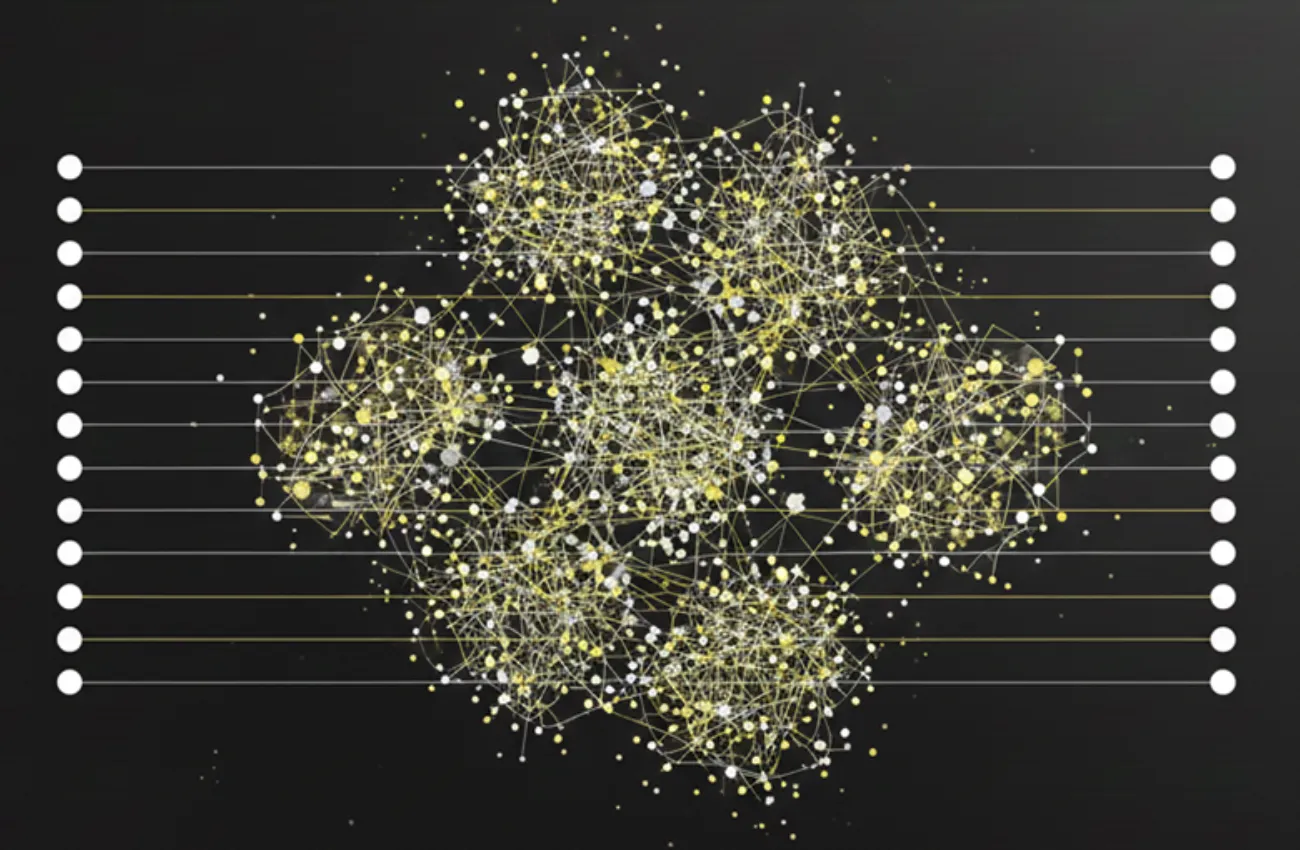
Unsupervised neural networks are a type of artificial intelligence model that learns from data without prior labelling or explicit rules. Unlike supervised models, which require classified examples (correct/incorrect), these systems identify patterns and anomalies by themselves by analysing large volumes of visual information.
Their operation is inspired by the human brain: they receive data, detect similarities, group behaviours and generate internal representations of the “ideal product”. As a result, they can recognise subtle deviations that other algorithms would not be able to predict.
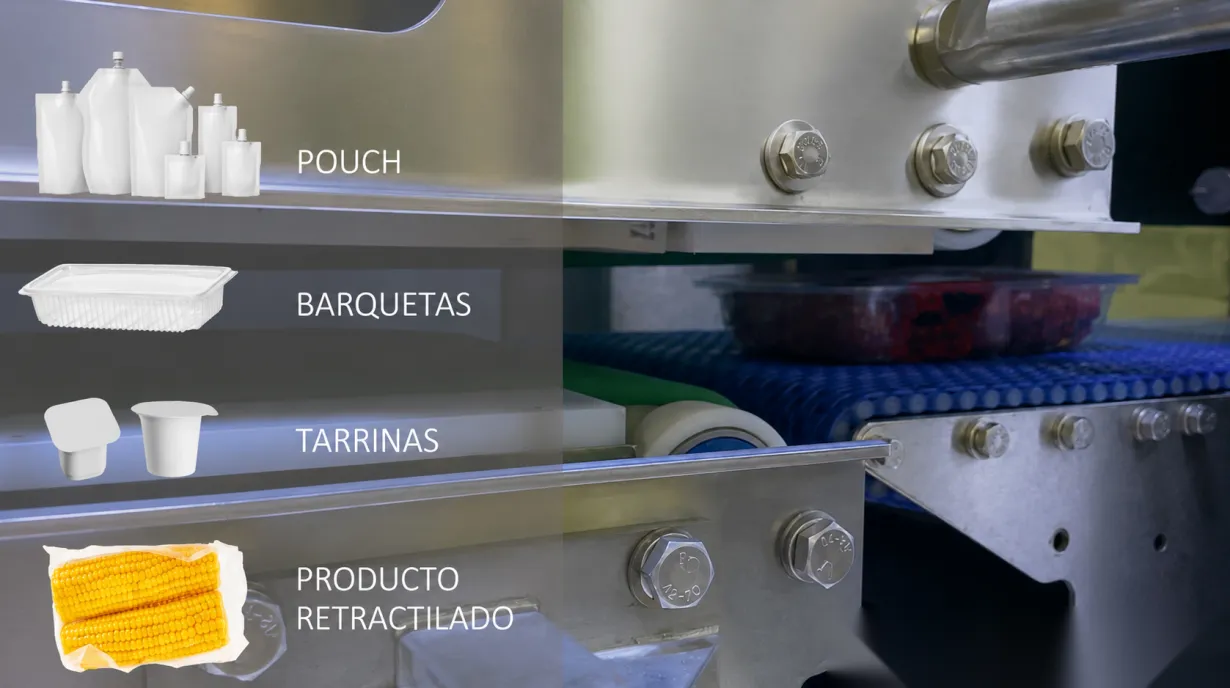
In industrial environments, this automatic learning enables machine vision systems to continuously improve their accuracy, adapting to real production variations such as changes in format, lighting or packaging material.
How unsupervised neural networks work in machine vision
The functioning of these networks can be summarised in three main stages:
- Massive capture of visual data
Industrial cameras capture real-time images of each product passing along the line. In labelling applications, this includes position, print quality, presence of codes and the integrity of the label.
- Pattern learning without predefined rules
The system analyses thousands of examples to understand what a correct product should look like. It is not explicitly told what constitutes a defect; instead, it learns the standard appearance and detects deviations.
- Autonomous anomaly detection
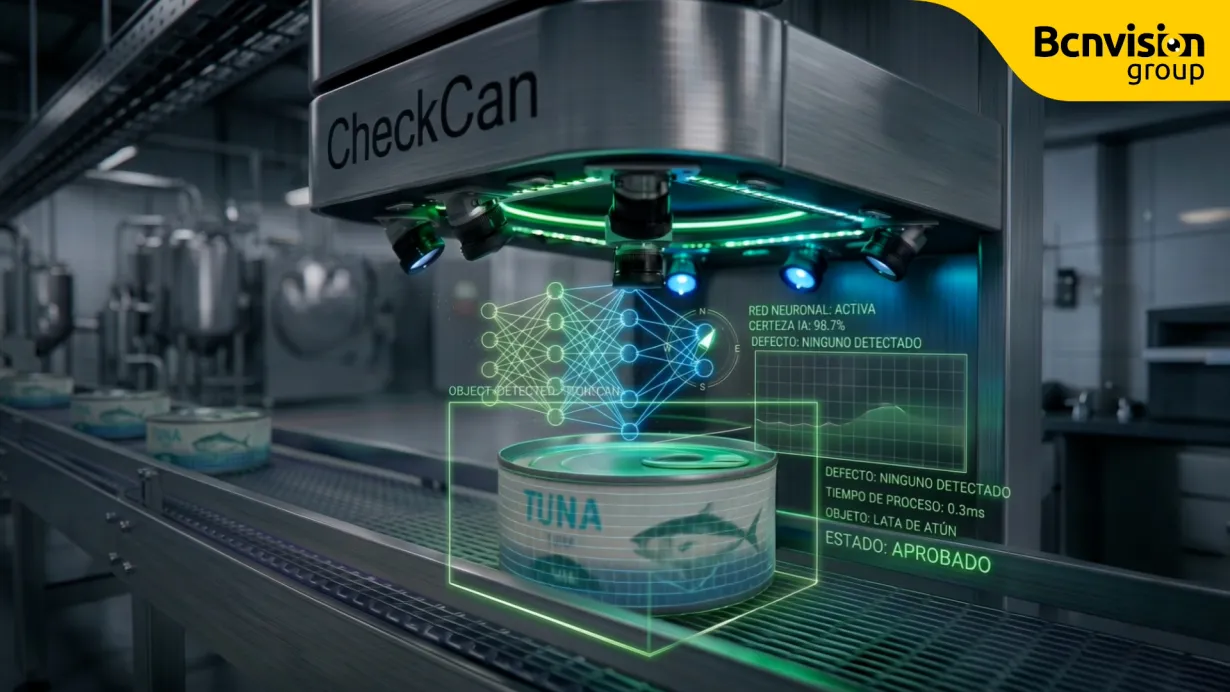
Once trained, the neural network identifies irregularities such as misaligned labels, bubbles, printing errors or missing labels, triggering automatic rejection mechanisms on the production line.
This process enables flexible and adaptable inspection in changing environments, which is essential in industries where packaging formats and label designs evolve constantly.
Advantages over traditional inspection systems
The main difference between conventional machine vision and systems based on neural networks lies in their adaptability. While traditional systems depend on manually programmed rules, artificial intelligence learns directly from data and improves over time.
This results in clear benefits:
● Detection of complex or unpredictable defects
● Reduced reliance on manual adjustments
● Fewer false rejects
● Automatic adaptation to new product formats
● Greater accuracy on high-speed production lines
Thanks to these capabilities, AI applied to quality control allows each package to be inspected objectively, consistently and without human fatigue, even in high-throughput production environments.
Application in label inspection: CheckLabel 360 IA
Label inspection is one of the processes where unsupervised neural networks provide the greatest value. Labels contain critical information, such as batch numbers, dates, barcodes and graphic elements, whose correct verification is essential for regulatory compliance and maintaining the product’s visual quality.
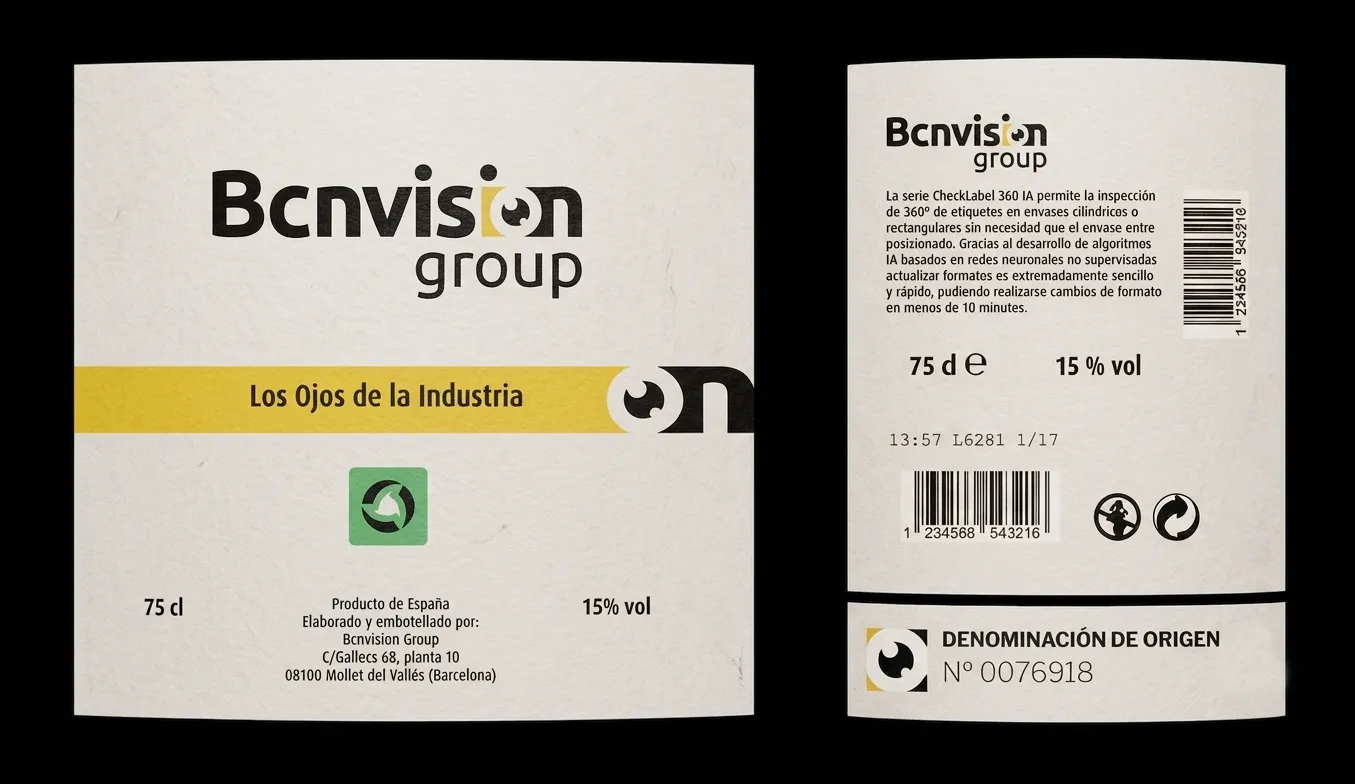
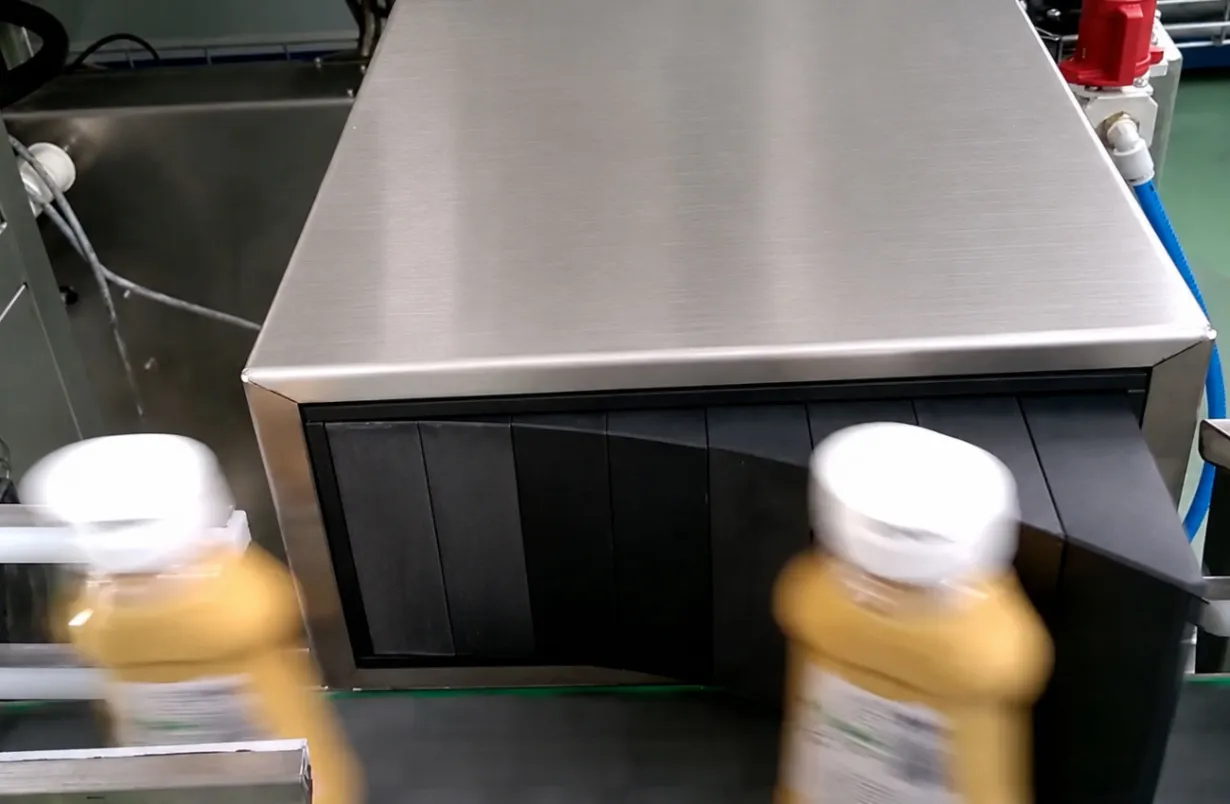
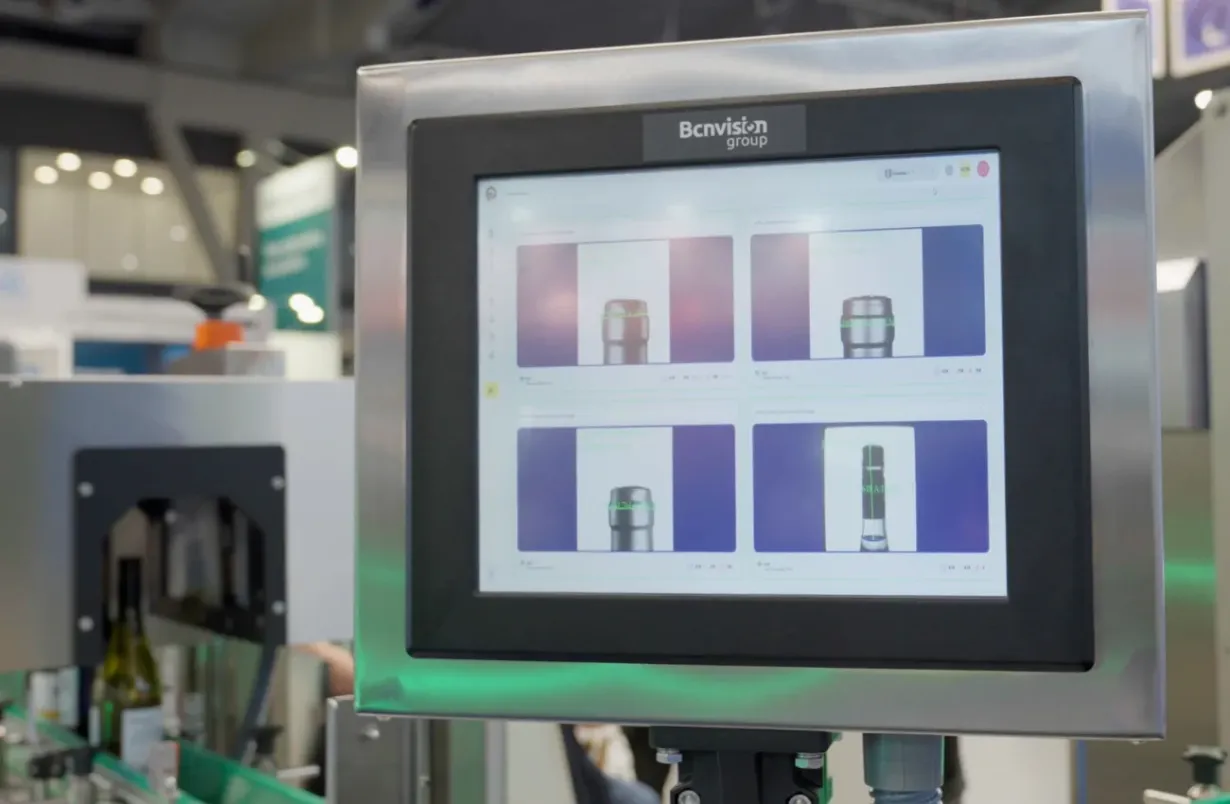
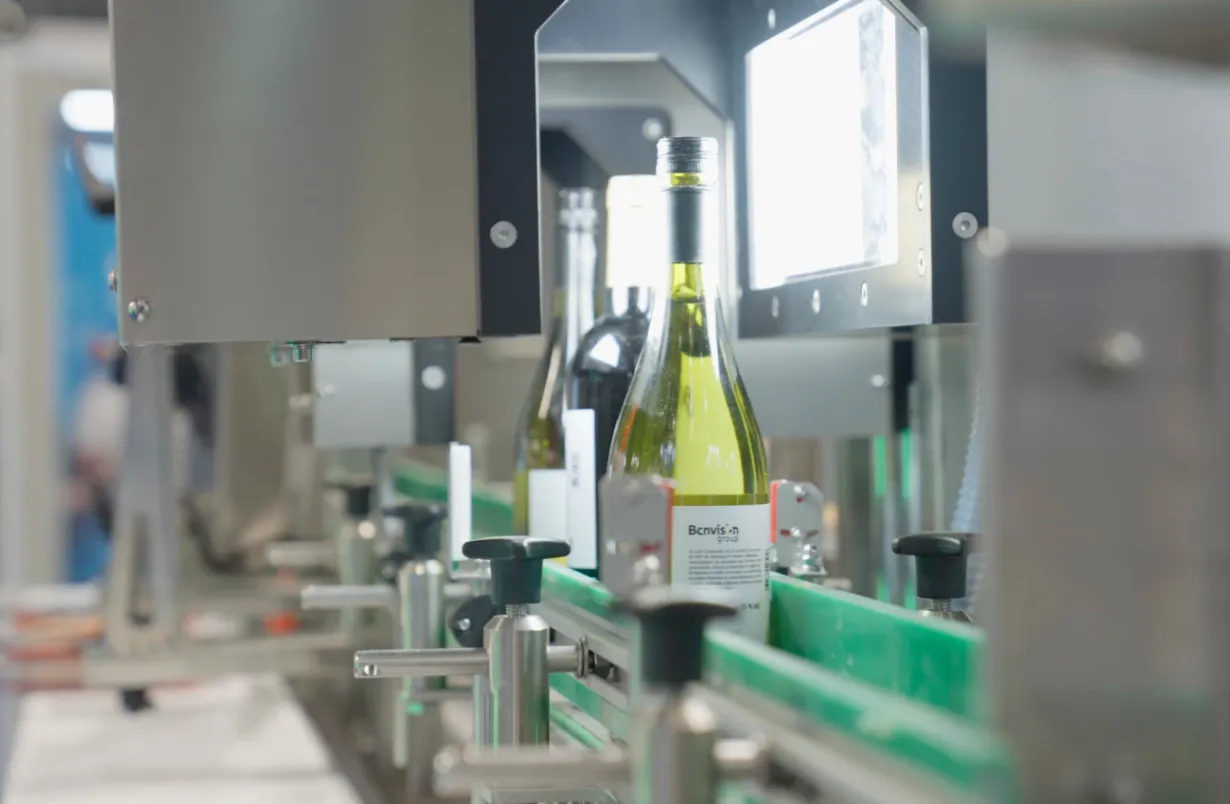
Check Label 360 IA integrates unsupervised neural networks to perform exhaustive label control on cylindrical or rectangular containers. These systems use multiple cameras and deep learning algorithms to analyse 100% of the container surface in real time, ensuring that each label is correct before the product continues along the line.
The 360º technology reconstructs a complete view of the label and detects any deviation from the standard: misalignment, typographical errors, presence or absence of mandatory elements, or printing defects.
Thanks to the development of AI algorithms based on unsupervised neural networks, Check Label 360 IA enables extremely fast and simple format updates, allowing format changes to be carried out in less than 10 minutes.
Moreover, being AI-based, the system continuously learns from the real behaviour of the production process, improving its accuracy and reducing operational errors. This is particularly useful in industries where product variability is high and manual inspections would be unfeasible.
Impact on industrial efficiency and quality
The integration of unsupervised neural networks into inspection systems represents a paradigm shift in quality control. It not only allows errors to be detected with greater precision, but also helps anticipate recurring failures in the labelling process.
Key benefits include:
● Assurance of labelling regulatory compliance
● Improved product traceability
● Automatic removal of defective units
● Reduction in complaints and returns
● Optimised productivity without stopping the line
In highly regulated sectors, such as pharmaceuticals and food production, these solutions make it possible to verify every single package at 100%, ensuring precise, traceable and fully automated processes.