The Role of Deep Learning in Battery Manufacturing for Electric Vehicles
Battery manufacturing for electric vehicles is at a decisive turning point. Improving material chemistry or increasing energy density is no longer enough: production lines must be able to detect the smallest defects, maintain full traceability of every component and make fast decisions in increasingly automated environments. In this context, Deep Learning has become a key technology for improving battery quality, safety and performance.
A lithium-ion battery is a complex system made up of electrodes, cells, modules and packs, all of which must be manufactured and assembled with extreme precision. A minor defect in an electrode coating, a deviation in cell height or an irregular weld can affect the service life of the battery and may even compromise vehicle safety. This is why automated visual inspection and artificial intelligence-based machine vision systems are playing an increasingly important role in gigafactories.
Deep Learning applied to electrode inspection
One of the first critical processes is electrode manufacturing. During the coating of anodes and cathodes, it is essential to check that the mixture is applied uniformly, without defects, misalignment or irregularities. Traditionally, this inspection could be slow and difficult, especially because it involves low-contrast surfaces and materials where defects are not always visible to the naked eye.
Deep Learning makes it possible to train models capable of distinguishing between a correct and a defective surface, even when the variation is extremely subtle. Combined with industrial cameras, advanced lighting and computational imaging, the system can detect marks, scratches, bubbles, poorly coated areas or thickness differences in real time. This helps reduce rework, minimise waste and correct problems before they move on to later stages of production.
Machine vision for cells, welds and final finishing
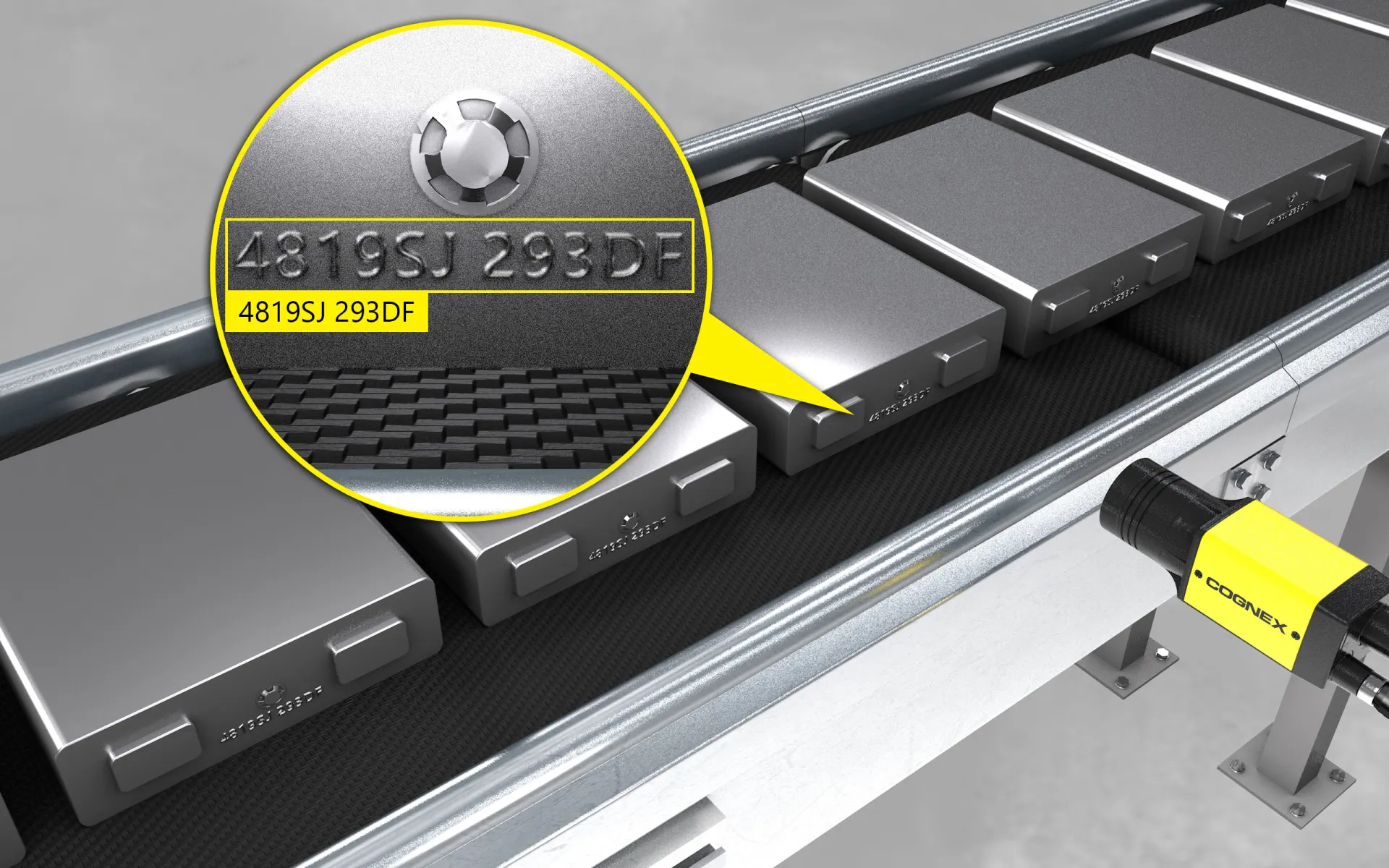
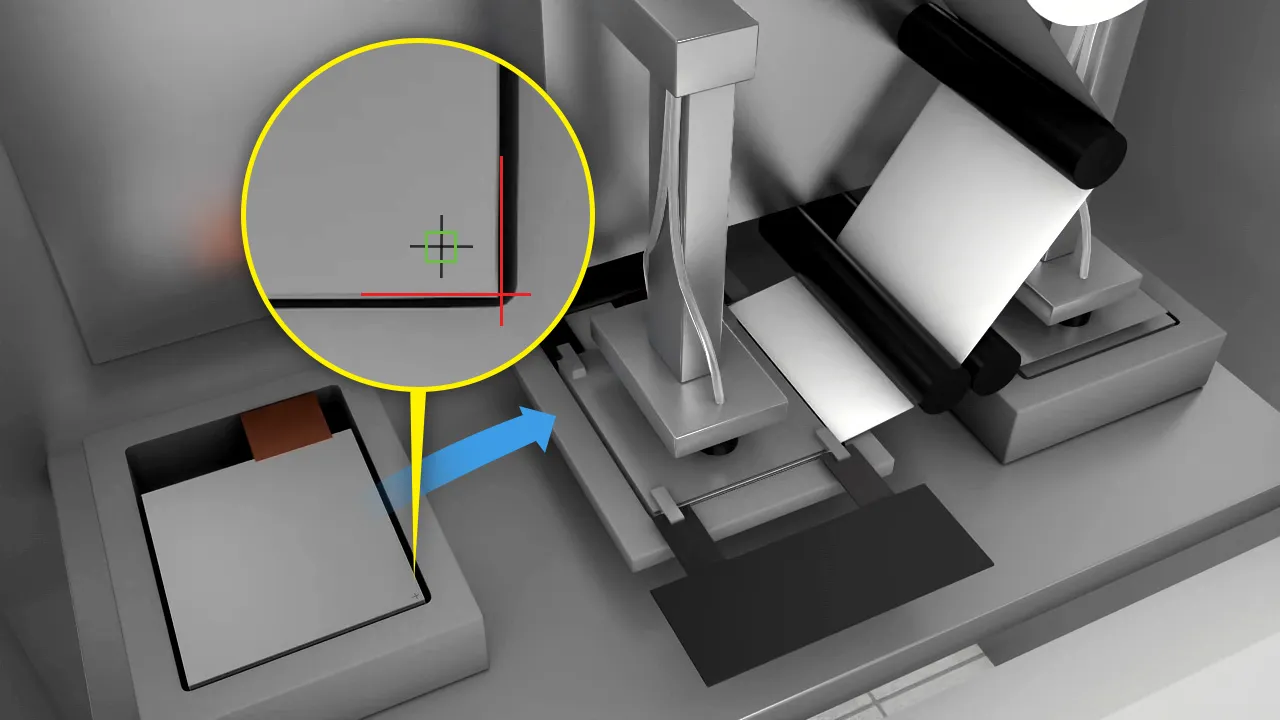
Cell assembly is another stage where precision is essential. Cell sheets must be correctly aligned, tabs must be welded to a high standard and each component must be identifiable throughout the entire process. At this point, AI-powered machine vision supports tasks such as locating fiducial marks, reading DPM codes on metallic or low-contrast surfaces and inspecting welds.
Deep Learning models can analyse images of both “good” and “bad” welds in order to learn how to identify defects such as incomplete welds, underpowered welds, excessive welds or sealing irregularities. This capability is particularly useful because not all defects follow a simple geometric rule. Some appear as complex visual variations that are difficult to parameterise using traditional machine vision systems.
During cell finishing, end-of-line inspection makes it possible to detect scratches, bubbles, surface damage or aesthetic defects that could affect battery performance or service life. Artificial intelligence helps classify these defects and prioritise those that represent a genuine functional risk.
Traceability and battery pack control
Traceability is another major challenge in battery manufacturing. Each electrode, cell, module and pack must be reliably identified, even when codes are printed on reflective, curved, metallic or low-contrast surfaces. Image-based readers and industrial OCR make it possible to register each part and link it to its production, inspection and assembly data.
When cells are integrated into modules and packs, machine vision can also verify heights, positions, polarities, connectors, busbars, wiring harnesses and welds. This information not only improves quality control on the production line, but also facilitates incident analysis, audits and predictive maintenance.
Safer, more efficient and more scalable manufacturing
The real value of Deep Learning lies not only in detecting defects, but in turning inspection into a continuous source of knowledge. Every image captured, every code read and every anomaly classified helps improve the process, adjust parameters and anticipate failures.
For battery and electric vehicle manufacturers, this means fewer rejects, greater safety, higher production performance and stronger traceability. In a market where range, reliability and user confidence are decisive factors, applying machine vision and artificial intelligence solutions to battery manufacturing is no longer an optional improvement: it is a competitive advantage.