Industrial Rejectors: How to Choose the Right System
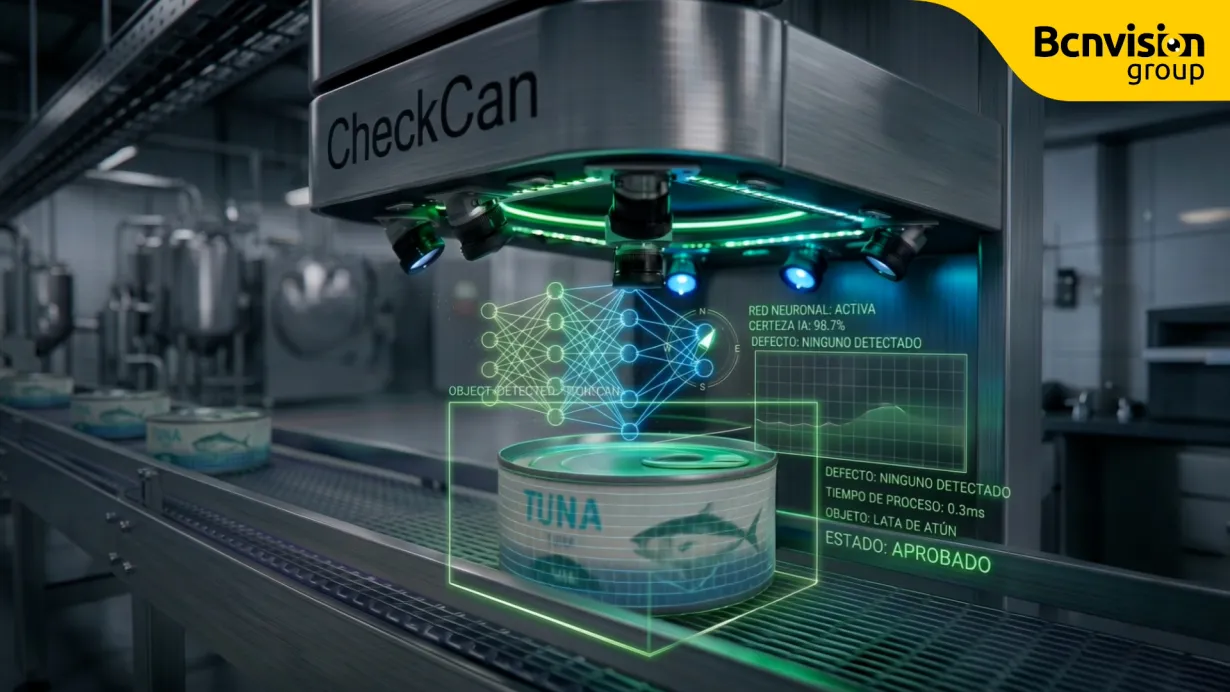
Detecting a defective product is only part of automated quality control. To prevent that product from continuing down the line, reaching the packaging process, or ending up in the hands of the customer, it must also be removed quickly, accurately, and safely.
This is where industrial rejectors come into play—responsible for automatically separating products that the inspection system has identified as non-compliant.
Although it may seem like a secondary element, the rejection system is a critical part of any quality control solution. An inspection can correctly detect a defect, but if the product is not removed at the right time and position, the final result of the control will be incomplete.
Choosing correctly between an air rejection system, an impact rejection system, or a progressive rejection system depends on numerous factors: product weight and dimensions, stability, transport speed, number of lanes, distance between units, and the handling required for the rejected product.
At Bcnvision Group, we work every day with production lines that need to automatically remove any non-conforming item, whether due to weight, shape, sealing, or the presence of defects. This guide helps you understand which type of rejector fits your product and line speed, as well as what sets apart the three systems we offer: Reject Air, Reject Impact, and Reject Progressive.
What Is an Industrial Rejector and Why Does Your Line Need One?
An industrial rejector is the mechanism that acts after an inspection system—whether vision, checkweigher, or detection sensor—identifies a product that does not meet established criteria. Its function is to remove it from the production flow without stopping the line or affecting the remaining items.
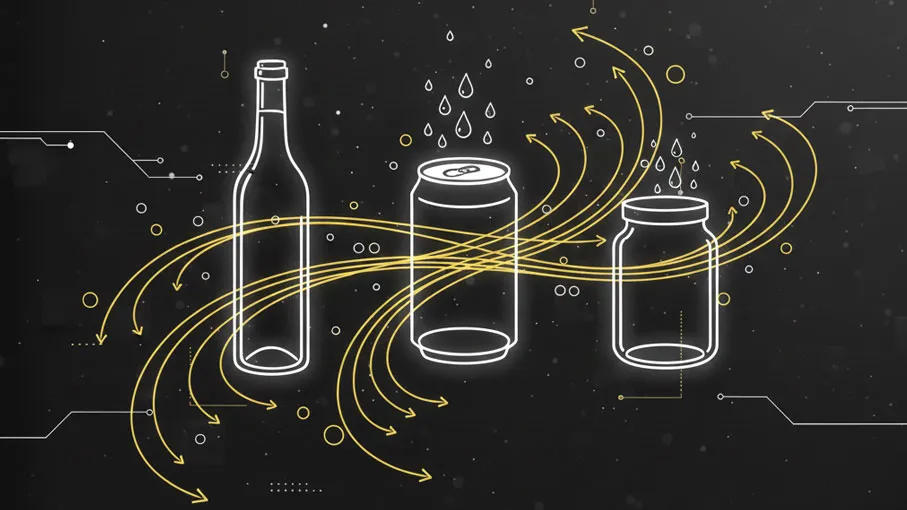
The effectiveness of this step depends on three factors that are almost always overlooked during the design phase: line speed, the type of product moving along it, and the degree of fragility or instability each item tolerates. A glass container is not ejected the same way as a cardboard box, and a line running at 300 units per minute does not allow for the same reaction times as one running at 60.
Why Is the Rejector a Critical Part of Quality Control?
A poorly selected or incorrectly adjusted rejection system can cause:
-
Defective products that fail to be removed.
-
Accidental rejection of compliant products.
-
Bumps or damage to packaging.
-
Falls and accumulations on the line.
-
Displacement of adjacent units.
-
Jams and production stops.
-
Loss of traceability regarding rejections.
-
Difficulty working at the required speed.
Therefore, the rejector should not be chosen as an isolated component, but rather as part of a global inspection, tracking, and rejection solution.
How Each Rejection System Works
Air Rejector: For Speed and Zero Contact
Reject Air uses calibrated blasts of air to divert non-compliant products without any mechanical part touching them. Each jet propels the item off the line through micro-impulses adjusted for pressure, duration, and distance to the product.
This system works best when the product is light, line speed is high, and you want to maintain a continuous flow without mechanical interruptions. Since there is no physical contact, the risk of damaging the product or the rest of the line is significantly reduced. [View Reject Air datasheet]
Impact Rejector: For Heavy or Bulky Products
Reject Impact acts via an arm or surface that exerts a direct lateral force on the product. It is the go-to option when air lacks sufficient power to move the item—for example, boxes, jugs, or large-volume packages on single-lane lines.
There are variants of this model designed for heavy products and smaller variants aimed at cans or bottles with less stability. The key to this system is robustness, as it is designed to operate in demanding environments at high speeds without losing ejection precision. [View Reject Impact datasheet]
Progressive Rejector: For Fragile or Unstable Products
Reject Progressive displaces the product using a synchronized and gradual movement, without harshness. Instead of knocking the item off the line all at once, it guides it toward a secondary inspection line or an alternate route within the facility.
This system is the best option when the product is fragile, irregular, or unstable, and an impact or air blast could damage it, tip it over, or displace it uncontrollably. It is common in fine sorting and in processes where the product requires a second check before deciding its final destination. [View Reject Progressive datasheet]
How to Choose the Right System for Your Line
Before deciding which rejector to install, answer these questions about your process:
-
What is the weight and volume of the product you need to remove? Lightweight items work well with air, heavy ones require impact, and fragile ones call for progressive movement.
-
At what speed does the line run? The higher the speed, the more critical the system's reaction time and the precision of the rejection point become.
-
Does the product tolerate mechanical contact? If the package is unstable, delicate, or prone to tipping over, direct impact may create more problems than it solves.
-
Do you need to eject off the line or divert to a secondary process? This distinction alone often tips the scale toward Reject Progressive over the other two systems.
A common mistake is choosing a rejector based on price or what competitors use, without analyzing the actual behavior of the product on the line. An improperly sized system results in failed rejections, good products ejected by mistake, or premature mechanical failure.
Frequently Asked Questions About Industrial Rejectors
What is an industrial rejector?
It is the automatic mechanism that removes non-compliant products from a production line after they are detected by an inspection system (vision, weight, or sensors), without needing to stop the process.
How do you choose between an air, impact, or progressive rejector?
It is chosen based on product weight and fragility, line speed, and whether the goal is to eject it completely off the process or divert it to a secondary line. Air is ideal for lightweight products at high speeds, impact for heavy items, and progressive for fragile or unstable products.
How much does an industrial rejector cost?
The price varies depending on the model, line width, required speed, and degree of integration with the existing inspection system. Each project is custom-sized, so the quote is adjusted after analyzing the specific product and line.
Need help? If you have doubts about which rejector fits your production line, tell us what product you handle and what speed you work at. At Bcnvision Group, we analyze your case and recommend the system that best adapts to your needs—without over-engineering or falling short on capacity.